
FAQs
Here are some answers to common questions about therapy, how I work, and how we might work together. Book a free callAbout Therapy
Therapy is a space where you're deeply listened to, in a way that's different from talking with friends or family. With people close to you, you may find yourself editing what you say, because you don't want them to worry, because you're not sure they'll understand, or how they'll respond.
A trusted therapist won't jump in to fix things or offer advice. Instead, you get space to connect with your inner world and understand your own experiences, emotions and patterns, at your own pace. Over time, this can help you work through difficult situations and feelings, make changes that matter to you, and move forward with more confidence and self-belief.
No. Many clients begin therapy simply feeling stuck or overwhelmed, grieving, or navigating a major change, without knowing exactly what they want to achieve.
Goals often become clearer over time, and sometimes the process itself, being heard and supported, brings insight and relief. Therapy is flexible, and what we focus on adapts to what feels most meaningful for you as we go. What looks like a tangent or therapeutic 'side-quest' often turns out to be exactly the right place to focus.
The most important thing is that you feel safe enough, supported, and able to explore your experience at your own pace.
Progress isn't always linear or measurable in a conventional sense. It's reflected in how you relate to your inner world, respond to life, and experience your emotions. Examples might include:
- A sense of increased hope or possibility
- Being less triggered by experiences or people
- Being less reactive to situations that have previously been difficult
- Feeling less overwhelmed
- Self-critical and anxious voices become less dominant
- A sense of having more choice, rather than reacting automatically to old patterns
- Experiencing greater self-compassion, emotional clarity, and resilience
We check in regularly to explore what's shifted. Even small changes, like feeling a difficult feeling without self-judgment, or responding to something tricky with more confidence, are meaningful signs of progress.
It's very hard to predict how long it will take to reach the point where you feel ready to stop.
On average, clients work with me for a year. Some stay for six weeks, others for four years or longer. The regularity and number of sessions is guided by you, your needs, and the nature of the work. Work towards a single defined goal may take a couple of months; more general, insight-oriented work may take years.
EMDR tends to be faster than some other approaches, though it's worth being realistic about what 'fast' means here. It won't clear everything in one session. A single-event trauma, like a car accident, can work relatively quickly. Longer-term or complex trauma, childhood experiences, or deep-rooted patterns usually take months rather than weeks.
You're free to stop at any point. I usually recommend a minimum commitment of six weeks to allow the relationship to develop, with regular reviews and a planned ending.
Therapy can help you understand your own thoughts, feelings and patterns, and begin choosing new responses where old ones no longer serve you, whether that's spiralling thoughts, self-criticism, or reaching for distraction when things feel hard.
If you feel stuck, held back by anxiety or low self-belief, or caught in a pattern you can't quite shift, therapy offers a space to work with that directly, including the messages you may have absorbed from the world around you, like 'I'm too much' or 'I don't fit in.'
My core training was person-centred integrative therapy, and I have since then added CBT, Internal Family Systems (IFS) and EMDR (Eye Movement Desensitisation and Reprocessing), all evidence-based approaches shown to support a wide range of concerns. I work predominantly with IFS, weaving in EMDR and other approaches where helpful. Some people like some structure or reflection between sessions, others prefer not to have 'homework'. Either is fine.
No single approach works for everyone, or for every issue, so I'll check in with you regularly so we can adapt as therapy progresses. Some of the influences that shape my practice include:
- Internal Family Systems (this can also be called parts work, and sometimes inner child work)
- EMDR (Eye Movement Desensitisation and Reprocessing)
- Person-centred therapy
- Transactional Analysis (TA)
- Gestalt therapy
- Cognitive Behavioural Therapy (CBT)
- Attachment theory
- Ecopsychology and nature-based approaches
- Sandplay therapy
- Somatic (body-based) approaches
- Creative and experiential techniques
You may want to read my blog post Exploring Within: Integrating Different Therapeutic Approaches, From Person-Centred to IFS.
IFS therapy is based on the idea that we're all made up of different parts, not fixed traits, but aspects of you that carry particular feelings, beliefs or roles, often shaped by things that happened earlier in life. You might recognise an inner critic, a protector, or a part that still feels quite young and vulnerable. You might feel torn between two decisions, wanting to protect yourself from risk whilst also wanting to move forward.
IFS doesn't try to get rid of these parts. Instead, it helps you get to know them and understand what they're trying to do for you, even when their strategies don't feel helpful anymore. Underneath all of this is your core 'Self': a calmer, steadier part of you that's naturally curious and compassionate. As you build a relationship with your system from that place, things that once felt like inner conflict can start to feel more workable.
I answer this question in more depth in my blog post What is Internal Family Systems (IFS)?
EMDR (Eye Movement Desensitisation and Reprocessing) is a therapy that can help reduce the emotional distress caused by disturbing or traumatic experiences. It can help process memories or beliefs that still feel 'stuck', even years later.
EMDR uses 'bilateral stimulation', sensory input on one side of your body then the other, usually eye movements, sometimes tapping, whilst revisiting the memory within the therapeutic relationship. This helps your brain finish processing something it wasn't able to fully digest at the time, so the memory starts to feel, more accurately, like something that happened in the past, rather than something you're still reliving. People often find the emotional intensity of a memory reduces, even though the memory itself doesn't disappear.
EMDR is best known as a trauma treatment, in particular for PTSD, but it's also used for a wider range of difficulties, including depression and anxiety. It's recommended by a number of major health bodies, including the National Institute for Health and Care Excellence (NICE), the World Health Organisation, the International Society for Traumatic Stress Studies, and the NHS.
I'm integrating EMDR into my practice alongside IFS. You can find out more on the EMDR UK website, and do ask if you're curious whether it might be helpful for you.
The terms are used differently in different countries and by different practitioners, which adds to the confusion. In the UK they're often used interchangeably. Here's how I understand them in my own practice:
- Counselling tends to be shorter-term and focused on a specific issue, offering guidance or strategies for day-to-day living.
- Therapy or psychotherapy usually works at a deeper level, often over a longer period, exploring the parts of us that shape our decisions and reactions beneath conscious awareness.
In my own work I draw on both, depending on what you need. That might mean working through a particular event, loss, or change, or looking more broadly at long-standing patterns in how you relate to yourself and others, including grief or trauma that's developed into something more complex, like C-PTSD.
Whatever the person facilitating the process calls themself, and whatever approach they take, decades of research has found consistently that the quality of the therapeutic relationship is one of the strongest predictors of positive outcomes (Norcross and Lambert, 2018). If you feel a genuine, trusting connection, you're far more likely to find the work helpful.
The practicalities
I work with adults. I've previously worked with young people through The Koru Project and CORE, but my current practice is with adults only.
I'm based in Bridport, West Dorset (DT6). I work online via Zoom and phone with clients across the UK and sometimes overseas. I also work in person with a small number of local clients, either in my Bridport therapy room or for 'walk and talk' sessions at scenic locations nearby.
Yes. Online therapy can be just as effective as meeting in person, offering the same depth of connection and insight. It lets you work from a private space of your choosing, whether that's at home or somewhere else you feel comfortable. EMDR can also be done over Zoom.
Meeting online can be especially welcome during times of struggle or change, since we can meet consistently without the added stress of travel. With a little preparation, a private space, minimal interruptions, and a moment to settle before and after, online therapy can feel just as grounding and effective as meeting in person.
I want to be clear about how I use, and don't use, it in my practice.
I use AI for behind-the-scenes support: drafting practice documents and communications, or helping create non-clinical resources and psychoeducation materials. This frees up more of my time and energy for client work, and for developing my clinical skills.
I do not use AI to write therapy notes, or to process anything discussed in session. If that ever changed, I'd talk it through with each client and provide a separate consent form first. It would never happen without your knowledge and agreement.
Sometimes, yes. I'll need to check licensing and insurance restrictions before confirming. Due to local licensing laws, I'm unable to work with clients based in the US or Canada.
Confidentiality is paramount, so I don't request or publish reviews or testimonials from clients.
You can contact me to request a free 20-minute introductory call to discuss your needs and see if we're a good match.
There's no pressure to decide: the most important thing is that you find the right therapist for you. If I'm not that person, I'm happy to point you towards others who might be.
If we decide to work together, we'll agree a regular time to meet and book your first session. I'll send a Therapy Agreement, a short questionnaire, and a personal information form via my secure online system.
The sessions
Therapy sessions are 50 minutes or 90 minutes. 90-minute sessions can be useful for EMDR, for certain stages of the IFS process, or if you tend to need more time to debrief and settle into the session.
Most clients meet weekly, at least to begin with, since this helps build momentum and keeps the work connected from one session to the next. We can talk about what makes sense for you as we go.
There's no right or wrong way to prepare. Some people spend a few minutes beforehand reflecting on what feels most alive for them that week; others simply arrive and see what emerges. It can be helpful to make a note of what comes up between sessions, in a journal, as notes on your phone, or in some other form.
Wherever possible, I recommend taking some quiet time before and after sessions, rather than rushing straight back into the demands of daily life. A short walk, a stretch, or even a few slow breaths can help prepare for the session, and then integrate what came up.
If we're meeting online, choose a private space where you won't be overheard or interrupted. Please avoid alcohol or recreational drugs before or during sessions, as they can make it harder to connect with yourself and the process.
Each session is shaped by what you bring. Some people arrive with a clear focus, others prefer a more open, organic approach, and both are fine. My role is to hold whatever you bring and create a steady, non-judgemental space where we can follow what feels most important.
Sessions are client-led. We may explore your different parts, the inner voices, feelings, or protective patterns that shape your experience, and give them space to be heard with curiosity and compassion. EMDR sessions tend to be more structured, since the approach itself follows a particular process.
When we first meet, I'll ask what's brought you to therapy and whether you have specific hopes for our work together. As things unfold, I check in regularly to see how you're finding the process.
Yes. The only exception would be if I felt you or someone else were at risk of being harmed, or weren't safe. No decision to break confidentiality would be taken lightly.
I work with a clinical supervisor and may consult colleagues with specific expertise, to make sure my work stays ethical and effective. I never disclose identifying details about my clients.
My main practice hours are 8.30am to 6pm, Tuesday to Thursday, plus Friday morning.
Financial
Please see my Fees page for current rates. Payment is due 24 hours before each session, via my online payment page, powered by Stripe.
Yes, I can accept clients insured with Aviva, AXA, Cigna, and WPA. Before we begin, I'll need your insurer's details, an approval code, and the number of pre-approved sessions. Pre-approval and coverage limits apply.
I understand private therapy isn't accessible for everyone. If my fees aren't currently workable for you, here are some alternatives:
- NHS services: speak with your GP. Waiting lists are often long, and you're unlikely to have a choice of therapist, but it's worth knowing this route exists.
- Charities and community organisations: many offer low-cost or free counselling. Hub of Hope is a good place to start.
- Counselling training providers: trainee counsellors offer reduced fees, and receive extensive training and regular supervision. Headstrong Counselling offers low-cost counselling for adults across the UK. In Dorset, Redlands Counselling offers reduced-fee counselling.
- Sliding-scale or reduced-fee therapists: some practitioners offer concessionary rates. In my own practice, clients paying full fee help make reduced-rate places possible for others, though my reduced-fee slots are currently full.
Even if we don't end up working together, I'm happy to point you towards colleagues or organisations that might be a better fit for your budget.
What if…?
Life is unpredictable, and I understand you may sometimes need to cancel. Cancellations with more than 48 hours' notice are free. To help keep our work consistent, I ask clients to keep cancellations to two per quarter (Jan–Mar, Apr–Jun, Jul–Sep, Oct–Dec) where possible. For sessions cancelled with less than 48 hours' notice, the full fee is due.
If you're not able to attend in person, Zoom or phone sessions are a flexible fallback, so therapy doesn't need to be interrupted.
This is more common than you'd think, and these sessions are often some of the most meaningful. You don't need to arrive with a plan. We can start simply by noticing how you're feeling right now, which usually points towards what's worth exploring.
Feeling anxious before a therapy session is completely normal. Many people worry about what to say, or whether what they're bringing is 'big enough'. Therapy isn't about comparison; it's a space for whatever feels important to you.
Noticing the nerves, or those internal voices trying to minimise your experience, is often a helpful part of the therapeutic process, and can be a starting point for self-exploration.
We go at a pace that feels manageable, whatever you're working through. I will never pressure you to talk about anything you don't want to, and I welcome your tears. Allowing vulnerability is one of the foundation stones of the work, and tears often indicate that something important is happening.
Often, the parts of ourselves that are hardest to face simply want to be understood, and tend to soften when met with curiosity rather than judgement. I'll help you stay grounded, and I'll never ask you to suppress your emotion, though I might occasionally ask if you can get some distance from it, and check in if something starts to feel like too much.
Progress doesn't always look like a straight line, and I can't promise specific outcomes. What I can promise is my full presence, skill, and genuine care in our work together.
If something doesn't feel helpful, please raise it, so we can adjust. Therapy is a collaboration, and if another practitioner might suit you better, I'm happy to signpost you. You may want to read my blog post Your Journey, Your Choice: Tips for Finding the Right Therapist for You.
The choice is always yours, and you're free to pause or end therapy at any time. Where possible I'd ask for a planned final session, since endings matter, they let us reflect on what's been gained and mark the journey you've made.
Clinical Supervision
Yes. I provide online clinical supervision for therapists and counsellors working across the UK. I also offer supervision to other people working in healing, holding and supportive roles. You can read more about clinical supervision with me here.
Yes. Drawing on my Level 3 training with the IFS Institute and my experience supporting training as a Program Assistant (PA), my supervision integrates Internal Family Systems (IFS) principles, including paying attention to parts, Self-energy and unblending. IFS integrates well with EMDR and my core training in humanistic integrative therapy (Person-Centred, TA, Gestalt, CBT). It enhances the supervision process, irrespective of my supervisees' modalities.
Yes. Within the frame of clinical supervision, we can reflect on many facets of running a practice, including policies and processes, money, fees, caseload, marketing (in IFS terms, I call this Self-led marketing) and the realities of running a therapy practice.
Get in touch
Ready to get started?
Whether you’re looking for therapy, or you’re a therapist yourself interested in supervision, consultation or integrating IFS into your practice, I’d love to hear from you.

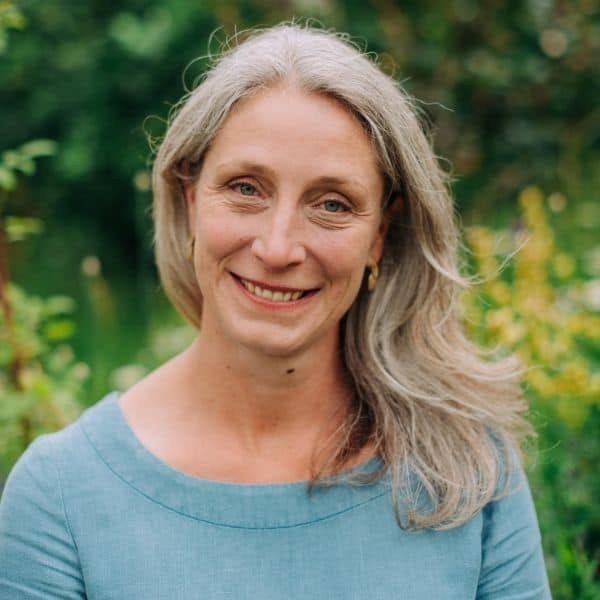
Meet Emma
About Emma
Emma Harris is a psychotherapist, IFS therapist, EMDR practitioner and clinical supervisor. She is an accredited member of the BACP and trained to Level 3 with the IFS Institute. Her own experience of living off the expected path shapes how she works.
