About me
IFS, EMDR and integrative therapy for adults navigating grief, identity and change. Book a free call
Meet Emma Harris, psychotherapist (she/her)
Welcome! My name is Emma Harris.
I work with adults across the UK who’ve spent a long time adapting themselves to fit, and have reached the point where that is no longer working.
Grief, trauma, neurodivergence, childlessness, perimenopause and other threshold experiences often bring people to work with me. My own experience of living off the expected path shapes how I work.
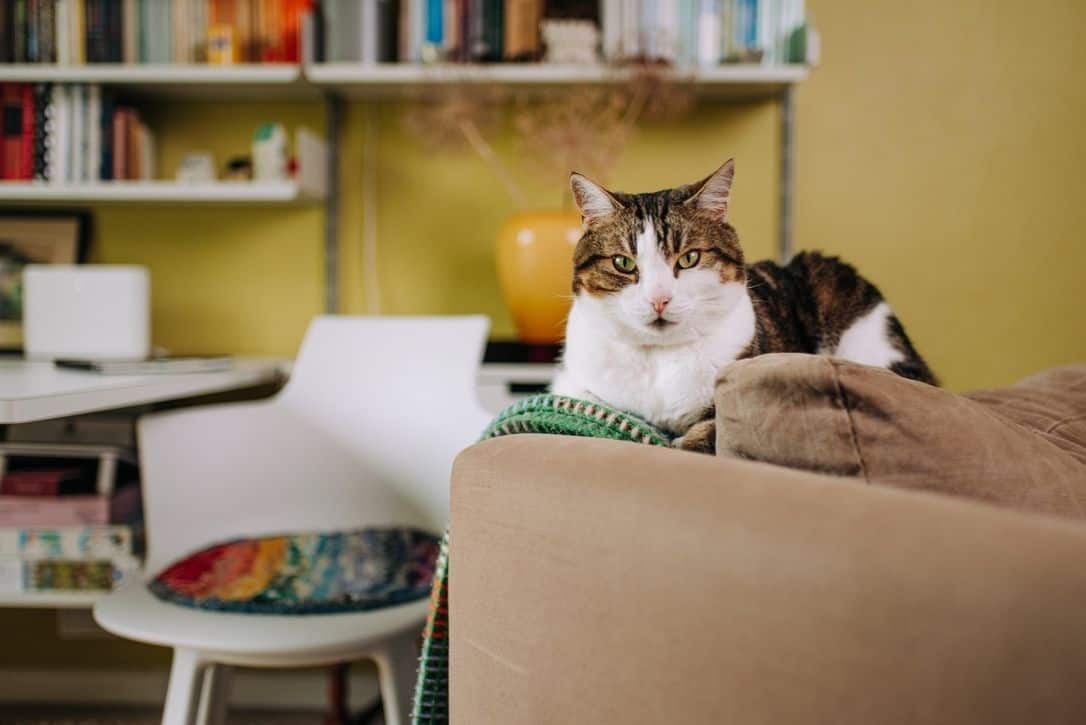
I’m a gardener, sauna lover and cold-water dipper, often supervised by a three-legged cat called Wendell. I firmly believe that we can each heal ourselves, once the stories we’re holding have truly been witnessed.
Professional snapshot
I’m a BACP-accredited psychotherapist (membership number 00947550), with a core training in integrative therapy. I am trained in Internal Family Systems to Level 3 with the IFS Institute, I’m an EMDR practitioner and a clinical supervisor.
I am based in Bridport, Dorset, and work online with adults around the UK.

Professional credentials
Qualifications and training
My core training is in humanistic integrative psychotherapy, and I am an Accredited member of the British Association for Counselling and Psychotherapy (BACP).
I am trained in Internal Family Systems (IFS) to Level 3 with the IFS Institute and am currently in the process of applying for IFS Certification. I periodically support IFS trainings as a Program Assistant.
I am an EMDR practitioner, completing EMDR Parts 1, 2 and 3 training with Richman Training.
I am also a clinical supervisor, offering professional support for therapists and counsellors, as well as others in healing and holding roles (here is a blog post I wrote about how IFS connects therapy and supervision, and a page about clinical supervision with me).
Continuing Professional Development (CPD)
I continually develop my skills and deepen my practice through training, workshops and collaboration with peers. I also support IFS training courses in the UK and online.
Alongside formal learning, I’m an active participant in a number of professional and lived-experience communities, including neurodivergent, queer and childless communities. I am also a part of the thriving and socially-engaged community of IFS therapists and practitioners.
I work in accordance with the BACP Ethical Framework (updated 2026). I hold professional insurance with Holistic Insurance, an Enhanced DBS and registration with the Information Commissioner’s Office. I maintain my knowledge of data handling and confidentiality (UK GDPR), safeguarding and ethical practice in order to maintain high professional standards in my practice management.
I have regular clinical supervision and my own personal therapy.
Professional credentials
Formal training
- IFS Level 3 with Einat Bronstein (IFS Institute)
- IFS Level 2 with Ann Sinko: Shame, Anxiety & Depression (IFS Institute)
- IFS Level 1 with Liz Martins & Sue Smith (IFS Institute)
- EMDR Part 1 with Sandi Richman
- CPCAB Level 6 Certificate in Therapeutic Counselling Supervision
- CPCAB Level 5 Diploma in Cognitive Behavioural Therapeutic Skills and Theory
- CPCAB Level 4 Diploma in Therapeutic Counselling
Ongoing learning and development
- Clinical supervision and Anti-Oppressive Practice (AOP) (Headstrong Academy)
- Decolonising therapy with Kamakanoe
- Embodied IFS and intuitive drawing with Ruth Culver (Drawing into Self)
- Way of Council facilitation with Heidi Rose (Circlewise CIC)
- The Four Shields with Betsy Perluss (School of Lost Borders)
- Heart Lessons of the Journey with Cece Sykes (I call this a ‘wounded healer’ retreat)
- Group work and healing circles with Chris Burris
- Shame & Guilt with Martha Sweezy (Center for Mindfulness & Compassion at Harvard Medical School)
Circles of Strength advanced group 2026-27 includes masterclasses with various IFS lead trainers, teachers and researchers:
- Toni Herbine-Blank on IFS in Relationship
- Cece Sykes on Advanced Protectors
- Joanne Twombly on IFS & Dissociation
- Chris Burris on Applying IFS to Life’s Dilemmas
- Kay Gardner on Legacy Burdens
Areas of ongoing study:
- Nature connection & rites of passage
- Somatic, embodied and creative approaches
- Self-compassion and mindfulness
- Perimenopause
- Gender, sexual and relationship diversity (GSRD)
- Shame, anxiety and depression
- Grief
- Childlessness not by choice (CNBC), also known as involuntary childlessness or childless by circumstance
- Neurodivergence, encompassing autism and ADHD
- Highly Sensitive People (HSP)
- Family estrangement
- The impact of boarding school and boarding school trauma
Training delivered and supported
- Created and delivered training for therapists working with childless clients (TheraSummit 2026)
- Program Assistant for IFS Level 1 with Sue Smith and Nick Austin (IFS Institute)
- Program Assistant for IFS Level 1 with with Marina Hazan & Devorah Hochstadter (IFS Institute)
- Program Assistant for 2026 IFS Foundation training with Christiane Churchill-Ley (OneSelf Institute & UnfoldingSelf)
Accreditations
- Accredited member of the British Association for Counselling and Psychotherapy (BACP membership no. 00947550. You can find my BACP directory entry here)
- Enhanced DBS (annual update service)
- Professional insurance with Holistic Insurance
- Registered with the Information Commissioner’s Office (ICO) as a responsible holder of sensitive data (ZA830159)
- Level 3 Safeguarding (Designated Safeguarding Lead)
Vision and values
Why I do this work
Therapy first helped me at a point when I badly needed it, and that first experience never quite left me. I returned to therapy a couple of times more before deciding to leave publishing and retrain as a therapist myself.
I know something of what it’s like to find ourselves on the margins of the story we were expected to have, and to find our own way through that rather than back onto the path we thought we would tread.
I know also the power of having a compassionate, skilled companion who can help us find our way when it’s got dark, or when we’re feeling lost or confused. I also know the gift of having someone celebrate the milestones with me, who truly knows what it means to reach them.

Who tends to find their way to me
I work with people whose lives haven’t followed the expected script, who’ve spent a long time adapting themselves to fit somewhere they don’t quite belong, and who have decided that isn’t working for them any more. It may be that something has happened – a loss or sudden change which they are grieving or processing, involuntary childlessness, perimenopause, a diagnosis, burnout. Or it may be that they are feeling anxious, depressed, exhausted, angry or lost and don’t really know why. Trauma runs through a lot of my work too, whatever the starting point.
My approach
What therapy with me is like
The relationship between us matters more than any technique I bring to it, because the relationship is where change happens.
I offer compassionate witnessing, attunement and curiosity, so clients can begin to understand their patterns and responses, and find ease from any shame or judgement. Part of my job is to hold the frame of our work together; clients don’t have to run the therapy as well as attend it!
It can be such a relief to let someone else help.
People I work with often describe me as calm and steady, warm and compassionate. There’s a sense of delight and humour that runs alongside the depth, and people sometimes tell me they finally feel accepted: not managed, and not a problem to be fixed. Peers who know my work say much the same: that I build trust quickly, and that they often feel a sense of safety with me.

I work intuitively and creatively. I don’t believe that people need to be fixed, or that we can think our way out of something difficult. More often, the way out is through: by turning towards what’s hard, gently, once there is enough of a sense of safety. My clients bring the lived knowledge of their own experience; I bring my skills and training, compassion and attunement.
There’s room here for lightness as well as depth. Laughter has its place in the therapy room too.

I’m an integrative therapist with IFS at the centre of how I work, and EMDR alongside, drawing on person-centred therapy, Transactional Analysis, Gestalt and CBT where they’re useful, rather than fitting clients into one fixed method.
Self-compassion is a foundation stone of my work, as is a sense of interconnectedness with the natural world. I may offer psychoeducation along the way – a theory of how the brain works, an attachment pattern, a trauma response – and I draw on mindfulness practices to support new ways of experiencing ourselves and our surroundings.
Inclusivity & anti-oppression
A note on power and privilege
I hold an anti-oppressive, justice-informed stance, and am always trying to learn and do better. I’m aware of my own privilege, and of the systemic patterns that shape whose experience gets taken seriously and whose doesn’t. I don’t treat diverse identities, communication needs or ways of experiencing the world as a problem, and I don’t treat trauma responses as evidence of a pathology or mental health disorder.
I will ask what ways of communicating and therapeutic techniques feel most comfortable for you. I will check regularly that you feel safe and will take time to reflect on how you are experiencing therapy.
My approach is consent-led, trauma-informed, anti-oppressive and neurodivergence-affirming. That includes working with people of all genders, including trans and non-binary folk.
If you’d rather work with someone who more closely shares a specific aspect of your lived experience, I’d be glad to help you find them.
A bit more about me
Outside the therapy room
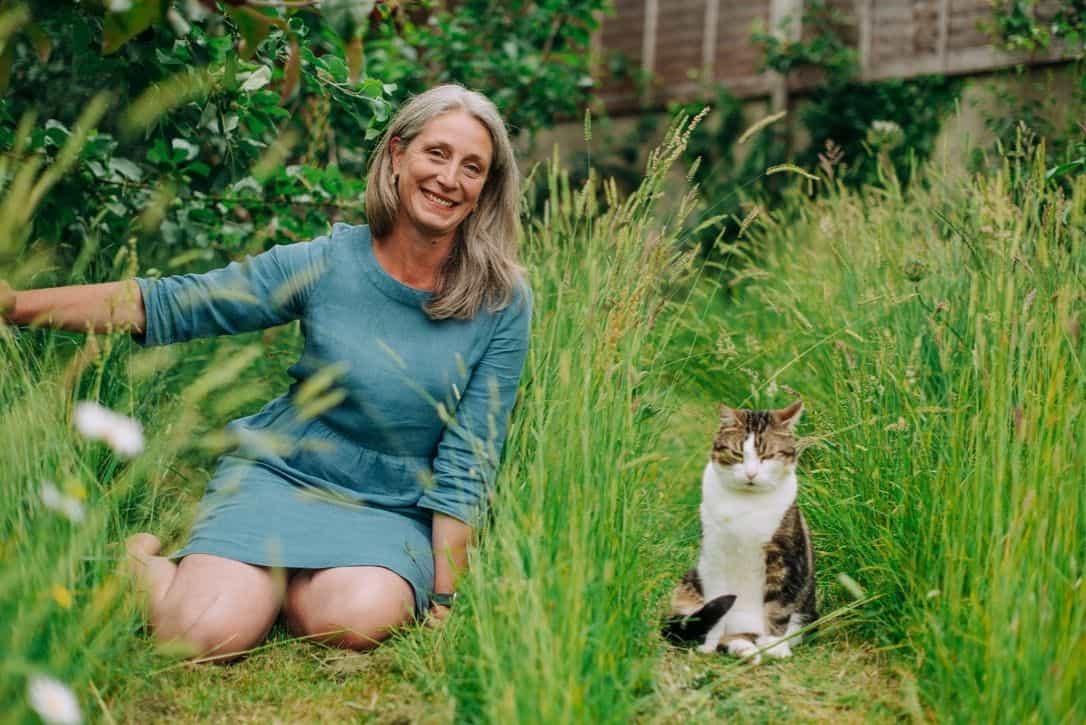
My garden is a sanctuary for me – even when it’s hard work! I go there to reground myself and to process things. You’ll find me there before work, after work, between client sessions, before bed. I grow veg, fruit and flowers and take delight in the life contained in that little plot of land. My garden teaches me about balance, humility and trust.
I share my home with Wendell, a three-legged cat who has become an unofficial part of the therapy ecosystem here: he curls up nearby whilst I’m with clients – often on my lap, or theirs (subject to consent!)
I have a longstanding interest in rites of passage: the thresholds we cross in life, and the ways in which grief, loss, awe, wonder, endings and beginnings change us. I’m a longstanding member and cofacilitator of my local Way of Council circle, where we follow that ancient tradition of sitting together to bear witness to each other’s stories, and to tell our own.
I love also to take myself to the nearby coast or hill-forts – or to Dartmoor, for quiet time with the hawthorn, granite and wild ponies. I find a particular peace out there I haven’t found anywhere else: much of my thinking about thresholds and change has taken shape there.

Get in touch
Ready to get started?
Whether you’re looking for therapy, or you’re a therapist yourself interested in supervision, consultation or integrating IFS into your practice, I’d love to hear from you.