
Who I work with
Specialisms in grief, change, involuntary childlessness and neurodivergence. Book a free callIs this you?
People living off the expected path.
I often work with people whose lives haven’t followed the expected script: who’ve spent a long time adapting themselves to fit somewhere they didn’t quite belong, and have reached the point where that no longer works.
Maybe you feel constantly on the back foot, or find yourself exhausted after social interactions. Maybe your circumstances have changed and you’ve realised that the family or social structures you thought you could rely on are not in fact there for you, now you no longer fit the mould. Maybe you’ve always been treated like the golden child, or ‘the difficult one’, the scapegoat or the one that takes care of everyone else, and you’re tired of playing this role that you didn’t choose. Maybe you’re just fed up of doing the emotional work for people who aren’t taking responsibility for their actions or reactions.
These experiences may involve loss and grief, unexpected change, recognising that you won’t be a parent, or being neurodivergent in a world that wasn’t built with you in mind. Trauma often runs underneath, whatever the starting point.
If any of this sounds familiar, you’re in the right place. Have a look through what’s below, or get in touch if you’re not sure where you fit, that’s a completely normal way to start too.

Specialisms
Neurodivergence
We can explore the impact of living in a world that has not made much room for the way you think, feel or process things. Together we can explore the beliefs you have come to hold about yourself, and the messages you’ve been given about how you should be in the world.
Childlessness
If you are not a parent, not by choice, your story may feel unheard and your griefs unrecognised or invalidated, even by the people closest to you.
Childlessness can affect identity, relationships, belonging and the future you imagined for yourself. You deserve to have that experience properly witnessed.
Grief & loss
Grief can change your sense of yourself, your relationships, and the shape of the future you thought you were moving towards. It may come in waves, sit quietly in the background, or feel unexpectedly close again. Therapy can offer space to make sense of what has been lost and how you want to live alongside it.
Change & identity
Sometimes we change faster than the life we’re living in. This can happen after a significant loss, a big decision, a diagnosis, the loss of a relationship (or of a dream), or simply with time. Therapy can offer space to make sense of what is changing, what you are leaving behind, and what matters to you now.
These often overlap. Grief can sit alongside neurodivergence, childlessness can bring up questions of identity, an unexpected change can reopen old grief. You don’t need to find the one box that fits.
Whatever it is that brought you here, our work together will be shaped around you as a whole person, just as you are now.
Inclusivity and anti-oppression
Inclusivity
I recognise that we each communicate or conceptualise things differently. You may prefer to work with image and metaphor, to draw on poetry or the arts; or you may prefer more direct ways of communicating. You may need additional time to process verbal or emotional stimulus. You may feel more comfortable with a clearly structured therapy session or you may prefer to be more free-ranging. I will ascertain how you want to work, and adapt to your needs.
If you have any specific learning or accessibility needs we can discuss how I can accommodate those in order to make therapy more accessible for you. If we meet in person, my peaceful therapy room is on the ground floor with step-free access and gentle lighting. I keep a bowl of fidgets for you to use if you wish.
Identity
I welcome people of all ethnicities, nationalities, abilities, religious affiliations, spiritual practices, sexual orientation, gender identities, ages, and neurotypes. I am queer-friendly and affirming of non-binary, trans and GNC folk, as well as diverse relationship arrangements. I work from an anti-oppressive, neurodivergence-affirming position and my work is consent-led and non-pathologising. My pronouns are she/her.
At the start of our work I will ask whether you would like to share with me anything about your identity which may not be immediately obvious. I strive to use language that is affirmative of your identity. I will ask what name you use, what your pronouns are, how you identify. If I ever fall short I welcome feedback or correction.
Privilege
As a white middle-class cisgendered female with a degree and further postgraduate training, I am aware of my privilege and acknowledge the role that systemic racism, sexism, and other forms of discrimination play in society.
I believe that a shared lived experience can be a great support to the therapeutic alliance. That said, even though certain aspects of my identity may overlap with yours, I don’t presume to know your whole experience. It is my job, my responsibility and my desire to listen deeply to your story, and to explore with you the context within which it sits. I recognise that this work is ongoing and requires constant self-reflection and education. I welcome discussion about how my privilege may affect our work.
If you would prefer to work with a practitioner with a specific lived experience or racial, religious or cultural background, I will be happy to contact my network to help you in your search.
Access
I offer a limited number of reduced-rate sessions for students, and for clients in their twenties earning low or no income. Around 30% of the people I work with are currently paying a reduced rate.
FAQs
What if I don't fit neatly into one of these categories?
Most people don’t. These areas of experience often overlap, and you don’t need to work out exactly where you fit before we speak. If something here feels in some way familiar to you, that’s usually enough of a starting point.
Can more than one of these apply to me at once?
Yes, and it’s common. Grief and neurodivergence, change and childlessness… these experiences are often woven in together – with a load more besides. We’ll work with whatever you bring, however complex or overwhelming it may feel to you.
What if my struggles aren't serious enough to need therapy?
You don’t need a crisis or a diagnosis to start therapy; just a sense that something isn’t working the way you’d like it to. That’s reason enough.
Does it matter that I've never had therapy before?
Not at all. I work with people at every stage, from those starting therapy for the first time to those who’ve been in and out of it for years. Wherever you’re starting from is just the right place to begin.
What if nothing here quite describes what I'm going through?
That’s alright. Not everything fits neatly under a heading on a website. Get in touch and we can talk it through together.
Get in touch
What's next?
If you’d like to find out more, you’re welcome to get in touch and we can book a free 20-minute call.

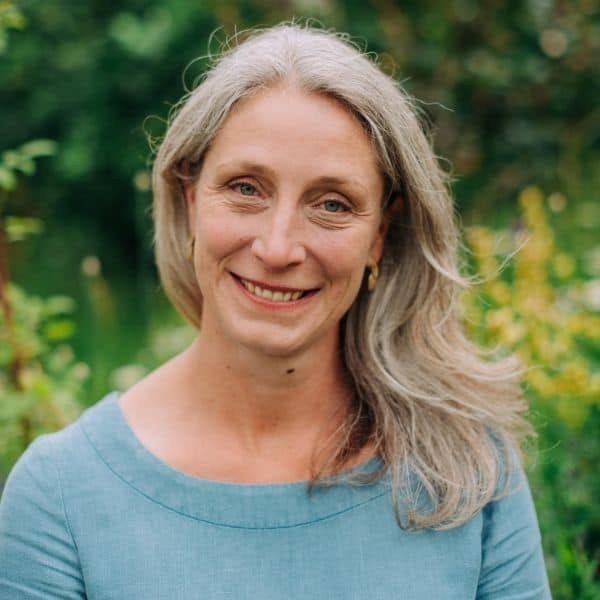
Meet Emma
About Emma
Emma Harris is a psychotherapist, IFS therapist, EMDR practitioner and clinical supervisor. She is an accredited member of the BACP and trained to Level 3 with the IFS Institute. Her own experience of living off the expected path shapes how she works.
